



Business websites
Signs your small business website needs a redesign
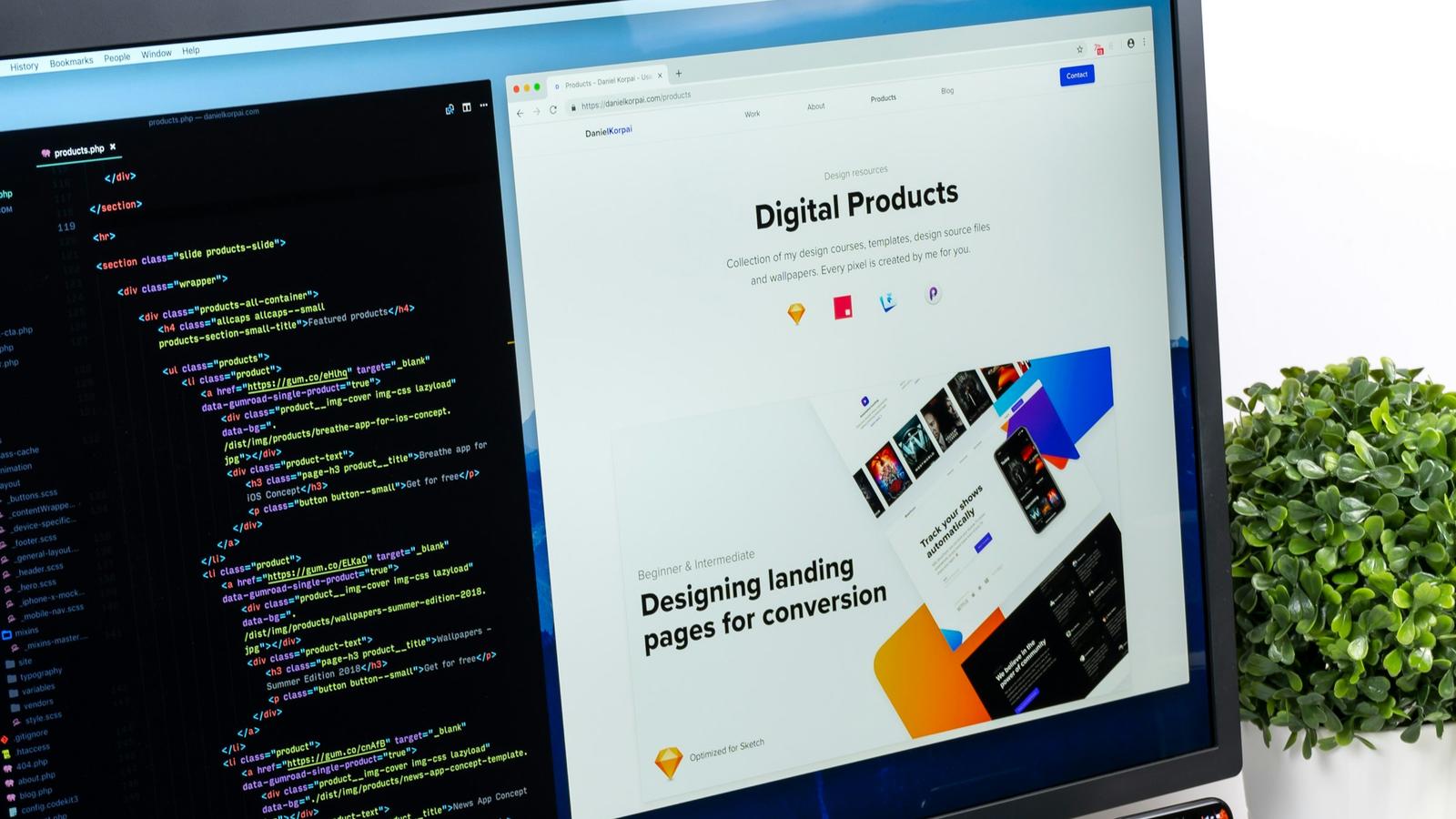
If you are looking for the signs your website needs a redesign, you are usually noticing one of a few things: the site looks dated, it is awkward on a phone, it loads slowly, or it no longer describes the business you actually run. Age on its own is not the test. The useful question is whether the site still helps a visitor understand the offer and get in touch.
I am Adam, a senior web developer based in the UK, working with clients around the world. I have spent more than ten years building websites and digital products, including work with teams at Sky, McLaren and the NHS, and I now design, rebuild and look after sites for independent businesses. I work in Next.js and React with a custom CMS, or in WordPress, depending on what the project needs. Here is a practical checklist for a small business website redesign, and when a targeted fix is enough.
What are the signs your website needs a redesign?
A single broken detail — a form that goes nowhere, a wrong phone number, one oversized image — should be fixed on the site you already have. A website redesign starts to make sense when several of the problems below are structural: they show up across pages, they are expensive to patch, or they stop customers doing the one thing the site is for.
- Visitors cannot tell what you do. The first screen should answer three questions quickly: what you offer, who it is for, and what to do next.
- It is hard to use on a phone. Tiny text, cramped buttons, sideways scrolling or painful forms mean the layout was never really built for a thumb.
- The site is slow. If PageSpeed Insights or your Core Web Vitals miss Google's recommended thresholds, visitors feel it — especially on a mobile connection.
- The content is outdated. Services you no longer offer, old prices, former staff, or a brand that has moved on, all turn the site into an outdated website that quietly costs trust.
- Forms, bookings or payments fail. A success message is not proof the enquiry arrived. If requests disappear, the site is leaking work.
- Simple updates need a developer. Changing a price, a photo or an opening time should not mean waiting a week.
- Traffic holds, but enquiries do not. People can find you and still leave because the path to a call or a booking is unclear.
- The underlying technology is a liability. Unsupported software, a vanished supplier, or a site still on plain HTTP, makes every change riskier than it should be.
- You avoid sending people to your own website. If you would rather share an Instagram profile or a long email, that is a business signal.
- Accessibility problems repeat. Poor contrast, missing labels or unreadable forms across templates are foundation issues. The reference standard is WCAG.
If two or more of these are true, it is time to ask when to redesign a website rather than keep adding patches. Tell me about the site and I will give you a straight view.
When should you redesign a website?
When should you redesign a website? When the problems cannot be fixed without reworking most of it: the structure no longer matches the business, the mobile layout fails on ordinary tasks, the platform is hard or unsafe to maintain, or “quick fixes” would cost more than a clearer rebuild.
It is usually not time just because the site is a few years old, or because a design trend has moved on. A clear, fast older site can still outperform a fashionable new one that converts poorly. Ranking guides I opened for this topic make the same distinction: measure the signs, then decide between a local fix, a website refresh vs redesign, or a full rebuild.
On my services page I say plainly that I will look at how your current site is built and give you an honest view on whether it is best to improve it or start again. If you want that diagnosis, start a conversation.
Does an outdated website really cost you work?
Yes — though not always in the way people expect. Visitors judge a site long before they read a paragraph of copy. Nielsen Norman Group, citing research by Gitte Lindgaard and colleagues, notes that people form an aesthetic first impression in as little as 50 milliseconds, and that this early reaction shapes how they perceive relevance, credibility and even usability. The related aesthetic-usability effect is well established: a considered site is often remembered as easier to use than it strictly is. The reverse is also true.
An outdated website is not only a visual problem. Wrong hours, a service you no longer offer, former staff, or contact details that do not match the rest of the web, all create a gap between the business you run and the one the visitor thinks they have found. If the brand itself has drifted, the rebuild should include the identity, not just the templates. I offer brand refreshes alongside website work for exactly that reason.
Is my website mobile friendly?
If you are asking is my website mobile friendly, do not rely on how it looks on your laptop. Open the site on the phone you actually use and try to do the main task: read the offer, find a service, open the menu, and send an enquiry. Look for text you have to pinch to read, buttons that are too close together, sticky bars that hide the form, or a page that only works if you turn the phone sideways.
This matters for search as well as for usability. Google's mobile-first indexing means Google generally uses the mobile version of a site for indexing and ranking. A desktop-only layout is harder to use, and harder for Google to understand.
A mobile friendly website is one of the first things I build into a redesign. If you want a tighter self-check, I will publish a short thumb-test in “does your website work on a phone?”. If the mobile layout is broken in every section, does my website need a redesign is likely yes. Ask me to look at the mobile experience.
Why is my website so slow — and does that mean I need a rebuild?
Why is my website slow does not automatically mean you need a new site. Large images, an ageing theme, too many plugins, or third-party scripts can often be improved where they are. A rebuild becomes the better option when the platform itself imposes a ceiling: it forces unnecessary JavaScript, the templates cannot be made stable, or every speed fix breaks something else.
I start with a diagnosis, not a redesign brief. PageSpeed Insights gives a lab test, powered by Lighthouse, plus field data from real Chrome users when Google has enough of it. I read the mobile result first, then the Core Web Vitals guidance Google uses in Search.
The current “good” thresholds, measured at the 75th percentile of visits on web.dev, are:
- Largest Contentful Paint (LCP): within 2.5 seconds.
- Interaction to Next Paint (INP): 200 milliseconds or less.
- Cumulative Layout Shift (CLS): 0.1 or less.
Google's page-experience documentation is clear that Core Web Vitals are used by its ranking systems, and that useful content still comes first. A perfect score is not the goal; a site that feels responsive on a phone, for most users, is.
I have written up the diagnosis I use in how I'd fix a slow site for local SEO in Bristol. The local examples are Bristol-specific; the speed process is the same anywhere. Get in touch if you would like that diagnosis on your site.
How much does a website redesign cost?
How much does a website redesign cost depends on how much of the current site can usefully stay. A light refresh of typography and a few layouts is a different job from restructuring the content or changing platform.
Published UK ranges, in pounds, give a planning baseline. They are not a price list, and they are not a conversion from another currency:
- A light website refresh is often put at £800 to £2,500.
- A straightforward small-business redesign, keeping a usable foundation, is commonly £1,500 to £5,000.
- A fuller redesign and rebuild is often £2,500 to £8,000+. WebKatie cites a similar £2,500 to £8,000 band, and ProfileTree puts a small brochure site of five to ten pages at around £2,000 to £4,000, or £5,000 to £10,000 for a medium custom site of ten to thirty pages.
- Larger or more custom work may need £8,000 to £30,000+. E-commerce rebuilds are often £3,000 to £20,000+.
Those figures are indicative ranges, before VAT, and may exclude writing, photography or hosting. I set out broader new-build ranges in “how much does a website cost”.
I do not publish a starting price. Every project is scoped individually, with costs agreed in a written proposal, and nothing starts until you agree. Tell me what is not working.
Do I need a website refresh or a full redesign?
A refresh keeps the foundation and improves what people see and use. A full redesign rethinks the structure, the templates and, often, the technology.
| Situation | Usually the right move |
|---|---|
| Outdated text, photos or contact details | Content updates |
| A few layout or mobile issues, a broken form, a slow image | Targeted improvements |
| Confusing navigation, or a business that has changed shape | Website redesign |
| Poor speed from specific assets or scripts | Technical optimisation first |
| Unsupported, insecure or unmaintainable software | Consider a rebuild |
| The site is generally working and easy to update | Ongoing website care may be enough |
If one or two signs apply and the foundation is sound, fix them in place. If the problems are spread across structure, mobile use, content and technology, a redesign is usually cleaner than a year of patches. I will not recommend a full rebuild for the sake of it.
Will a website redesign hurt my SEO?
A careless website redesign SEO project can lose you rankings. A careful one should not. The risk sits in changed URLs, dropped pages, missing redirects, and content that is thinner than what you already had — not in the new look itself.
If addresses will change, follow Google's site-move guidance for URL changes: map every important URL, put proper redirects in place, and keep the pages that already earn impressions unless you have a clear reason to retire them. Google's SEO starter guidance and its advice on creating helpful, reliable content still apply: be clear, be useful, and make the site easy to crawl.
Technical SEO belongs in the build, not as a phase after launch. That is one reason I keep development and SEO in the same pair of hands. I will go further on the essentials in “basic SEO for a small business website”.
What should a small business website redesign include?
A good small business website redesign is not a new skin on the same confusion. I would expect:
- A clear offer on the first screen, and a straight path to an enquiry.
- Pages designed and built for phones, not squeezed down from a desktop layout.
- Performance and search considered from day one, not bolted on later.
- A contact form that is tested end-to-end, not only on the thank-you screen.
- Content that describes the business you run now.
- A way for you to make ordinary updates without a developer.
- A stack that fits the job. I will recommend WordPress or a Next.js and React site with a custom CMS, not a default package.
- A migration plan if anything important already ranks: redirects, metadata, and a check that Google can still find the pages.
That matches how I describe website redesigns: a rebuild of the site you have, when it is slow, dated or hard to follow, with a straight path to an enquiry. The Glow by Emily site is a live example — a custom-designed website for a beauty and aesthetics business, built to feel premium, load fast and make it easy to get in touch. Nali Consulting is another: a site I designed and developed, with SEO work alongside it.
You do not have to commit to a retainer. Some clients add ongoing support later; others come to me just for the redesign.
Frequently asked questions
Does my website need a redesign?
It does if several structural signs apply: people cannot tell what you do, it is hard to use on a phone, the content no longer matches the business, or the technology is difficult or unsafe to maintain. A single broken element should be fixed in place.
How do I know when to redesign a website?
Look at evidence, not only taste: mobile usability, Core Web Vitals, whether enquiries have fallen, how long an ordinary update takes, and whether important information is wrong. If fixing those problems means rebuilding most templates, it is time.
How much does a small business website redesign cost?
Published UK planning ranges for a website redesign cost often sit around £1,500 to £5,000 for a straightforward project, or £2,500 to £8,000+ for a fuller rebuild. I quote from a written proposal after I have seen the current site.
How long does a website redesign take?
It depends on scope and how much content has to move. UK guides often suggest around four to eight weeks for a typical small-business project, or five to seven weeks for a small brochure site, and longer for a large migration.
Can I redesign my website without losing my Google rankings?
Yes, if you plan the migration. Keep valuable URLs where you can, add redirects where you cannot, and do not replace useful pages with thinner ones. Follow Google's guidance for site moves with URL changes.
Should I fix my current site or start again?
I will look at the foundation first. If the platform and templates can support the improvements you need, we fix them. If they cannot, starting again is usually cleaner.
Do I have to keep paying a monthly retainer after a redesign?
No. Ongoing care and SEO are available if you want them, and they are not a condition of the project. You work with me directly either way.
If you think it might be time
If several of the signs your website needs a redesign sound familiar, I would rather look at the site with you than guess from a screenshot. You will get a clear recommendation — a targeted fix, a refresh, or a full website redesign — with cost and timeline agreed in writing first.
Tell me about your website, or email adam@adamthedev.com. You can also message me on Instagram. If you are still choosing who to hire, see “how to hire a web developer”.
Photo by Daniel Korpai on Unsplash.