



Website design and development
Property Developer Website Design & Marketing: UK Guide
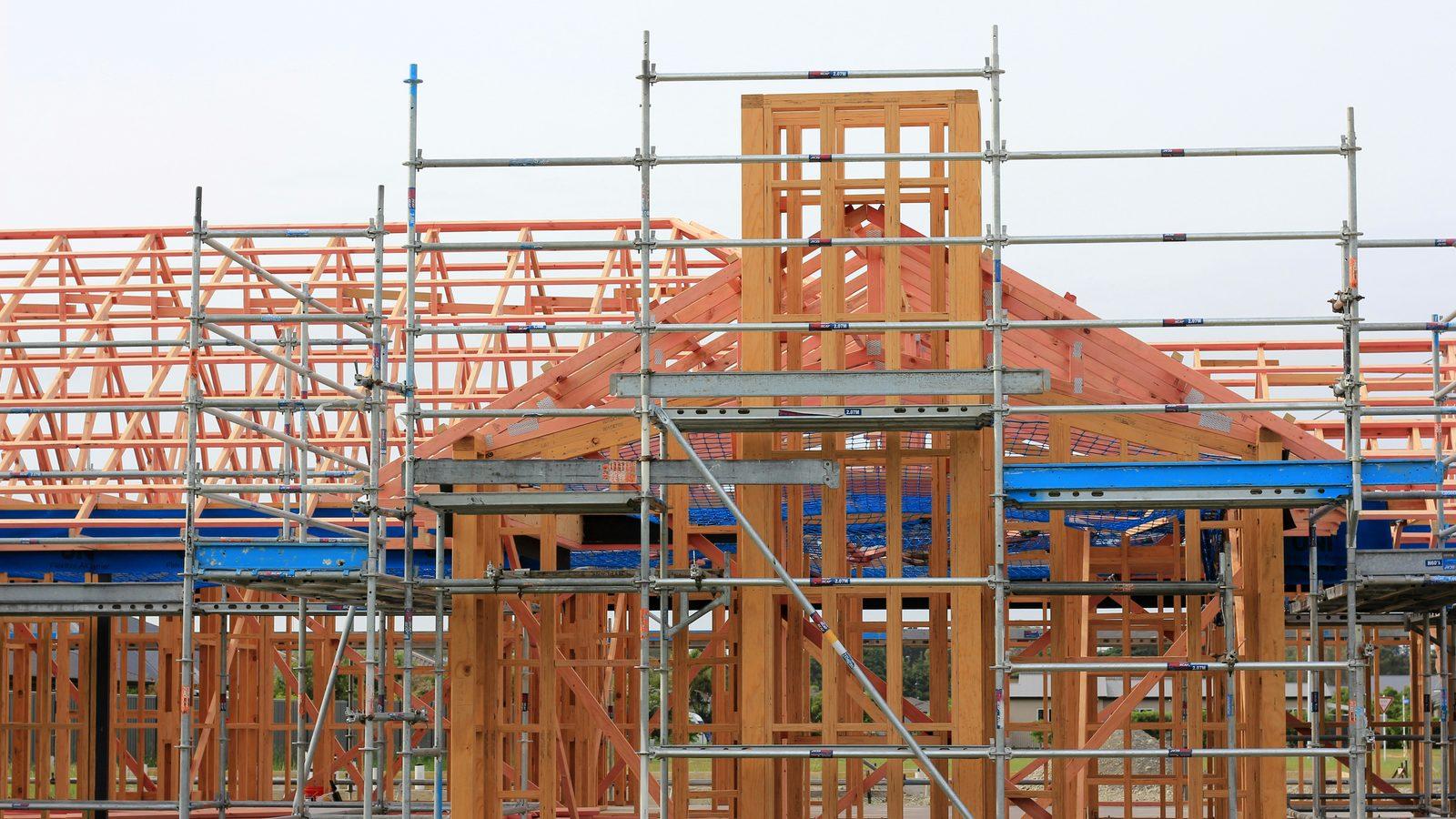
Good property developer website design does two jobs at once. It sells the homes on your current schemes, and it shows landowners, agents, funders and planners that you are a developer worth working with. Most buyers meet a new development online long before they visit a sales suite, so your website is your shopfront for the whole of a scheme's life, from planning to the last plot. In this guide I cover what a property developer website needs, how property development marketing fits around it, and what changes in the South West.
I am Adam, a senior web developer based in Bristol. I have spent more than ten years building websites and digital products, including work with teams at Sky, McLaren and the NHS, and I now run AdamTheDev, my independent digital studio. I offer Website Design & Development, SEO & Organic Growth, Website Management & Digital Support and Branding & Identity. I build in Next.js and React with a custom CMS, or in WordPress, depending on what a project needs, and the client owns the domain, the code and the content.
What should property developer website design include?
A good property development website is built around how buyers actually decide: where is it, what can I afford, which plot, what does it look like, and when can I move in? It also has to work for the people who never buy a home from you but decide whether you get the next site: landowners, agents, councils and investors.
Here is what I would expect on a developer site in 2026.
A page for every development (or a development microsite)
Each scheme needs its own page, with its own address on your website, a clear location, the house types, a specification, the price range once it is known, and a single obvious next step. Treat these as landing pages, not gallery pages. They are what people will find on Google when they search the development's name or "new homes in" its town.
Plot and availability pages buyers can trust
Plot availability is the part of a development site buyers return to most, and the part most likely to go stale. Every plot should show its status (available, reserved, sold), price, house type and size, and your sales team should be able to change it in seconds from the CMS. An interactive site plan helps, but a clear, accessible table behind it matters more. Rightmove's own new homes listing guide puts heavy weight on site plans and cross-selling other plots on the same development, and your own site should do the same.
Floor plans, CGIs, photography and virtual tours
Floor plans with room dimensions, CGIs before build, real photography once the show home is open, video and 360° tours. These are your heaviest assets, so they need care: properly sized images, modern formats and lazy loading, so a phone on 4G is not downloading a 20MB brochure to see one kitchen. Google publishes clear guidance on image SEO and video SEO, and both apply directly to development pages.
Register-interest forms connected to your CRM
For off-plan marketing, the register-interest form is the most important thing on the site. It should be short, ask for the basics first (name, email, phone, home type, budget, timescale), and send the lead straight into your CRM or sales inbox, tagged with the development it came from. If you plan to email or text people about launches, the consent wording has to be right; the ICO's guidance on direct marketing and PECR covers this, and most businesses that process personal data need to pay the ICO data protection fee.
Land, partnership and investor pages
A section for landowners and agents explaining the sites you look for, and a section for investors or funding partners, turns your website into a business development tool as well as a sales tool. A strong track record page with completed schemes, photography and a few facts about each one does a lot of quiet selling here.
Planning and community consultation pages
For larger schemes, a simple consultation page with the proposals, an FAQ, event dates and a feedback form makes engagement easier to run and easier to evidence. More on that in the South West section below.
Brand that matches the hoarding
Your website should look like the same developer as your site hoarding, brochure and portal listings. If your brand needs work before a launch, that is what my Branding & Identity service is for.
Do you need a separate microsite for each development?
Not always. A development microsite on its own domain can be right for a large, long-running scheme with its own brand. For most small and mid-sized developers, a strong main site with a dedicated section per development is the better choice, for three reasons:
- SEO builds up in one place. Every development page strengthens the main domain, and the main domain strengthens every new development. Separate domains start from zero each time.
- One CMS, one login. Your team updates plots, news and prices in one place.
- Nothing gets lost when a scheme sells out. The page becomes a completed-scheme case study instead of a dead domain.
If you already have several microsites, they can usually be folded into the main site with proper redirects. Google's guidance on site moves with URL changes is the checklist I follow, and my post on signs your website needs a redesign covers how to rebuild without losing rankings.
How do Rightmove, Zoopla and OnTheMarket fit with your own website?
The property portals are where buyers browse, and you should be on them. Rightmove, for example, sets out how new homes developers join, including the requirement to be registered with the ICO, and publishes its new homes products and tools for each stage from coming soon to last plots. Zoopla lists its own products for housebuilders, and OnTheMarket has a new homes developers directory.
But portals are rented space. Your own website is the one place where:
- you own the enquiry data and the relationship;
- you can tell the full story of the scheme and the developer behind it;
- you can rank for your development's name, your brand and your local area;
- your register-interest list keeps growing before any listing goes live.
The best setup uses both. Portal listings and your website should pull from the same source of plot data, so prices and availability never disagree. On my Bristol estate agent website example, each listing is one entry of data that builds its card, its page and its area page, and on a real site that data would come straight from the agent's property software so the website is never behind Rightmove. It is a concept for a fictional agency, not client work, but the same approach suits a developer's plots.
What does a property development marketing strategy look like?

A property development marketing strategy follows the life of the scheme. The website is the hub at every stage; what changes is what it needs to do.
| Stage | What the marketing needs to do | What the website does |
|---|---|---|
| Land and planning | Build credibility with landowners, councils and neighbours | Track record, land pages, consultation page |
| Coming soon and off-plan | Build a list of interested buyers before prices are set | Development page, register-interest form, CGIs, location guide |
| Launch | Turn the list into appointments and reservations | Plot availability, prices, floor plans, booking an appointment |
| Active selling | Keep enquiries steady and show progress | Build updates, show home photography, virtual tours, reviews |
| Last plots | Clear remaining stock | Clear availability, cross-selling plots, timely updates |
| Sold out | Turn the scheme into proof for the next one | Completed scheme case study |
Marketing for property developers usually mixes portals, a selling agent, site signage, local PR, paid social and email. Search is the channel that keeps working between campaigns, which is why I put so much weight on SEO.
How does SEO work for new developments?
SEO for a developer is mostly local, mostly about names and places, and mostly done before launch.
- One page per development, named the way people search. Use the development name, the town or village and "new homes" in the title, the first lines and an H2. People search "new homes in [town]" and "[development name] [town]" far more often than your company name.
- Location content that is genuinely useful. Schools, transport, travel times and local amenities, written for the buyer, not padded for search. Google's guidance on helpful, people-first content is clear that this is what it rewards.
- Google Business Profile for real sales offices. Under Google's eligibility guidelines, model homes and for-sale properties are not eligible for a Business Profile, but staffed sales or leasing offices are. If you have a genuine sales office, set it up properly.
- Structured data. Mark up your organisation, breadcrumbs and sales office details using structured data and, where it applies, local business markup.
- Fast, mobile-first pages. Google uses the mobile version of your site for indexing, so the phone experience is the one that counts.
- Search Console from day one. Google Search Console shows which development names, towns and questions are bringing people in. I use it monthly to decide what to improve next.
- Start early. A development page that goes live at the "coming soon" stage has months to gain visibility before launch. One that goes live on launch day is starting from scratch.
My guide to local SEO in Bristol goes deeper on Business Profiles, speed and local signals.
Property development marketing in the South West: what is different?
Property development marketing in the South West covers very different markets: city-centre flats in Bristol, family homes on the edges of Bath, Swindon and Exeter, and smaller schemes in Somerset, Devon and Cornwall villages. One template does not fit them all.
A few things are worth knowing.
- Prices vary a lot. The UK House Price Index for September 2026 puts the average South West price at £301,616, with the UK new build average at £344,286 in July 2026, against £269,401 for existing homes. Buyers paying a new-build premium will compare carefully, so your specification, energy performance and running costs need to be easy to find.
- New supply is significant. England added 208,600 net additional dwellings in 2024 to 2025, including 190,600 new build homes. Buyers have choices, so your scheme has to stand out online.
- Every development needs its own local SEO. "New homes Bristol" is not the same search as "new homes Keynsham" or "new homes Portishead". A page per location, with real local detail, beats one generic page.
- Community involvement is expected in Bristol. Bristol City Council asks applicants for major developments to involve the local community at the pre-application stage and submit a Community Involvement Statement. Its suggested ways to get a wider response include meetings, exhibitions and developing a website. The government's guidance on pre-application engagement and the National Planning Policy Framework both encourage early engagement too. A clear consultation page with plans, an FAQ and a feedback form is the easiest way to show your workings.
- Local trust matters. Many South West buyers already know the area well. Showing completed local schemes, local partners and real photography does more than stock imagery.
What rules apply to marketing new homes in the UK?
This is the part many developer websites get wrong. This is general guidance, not legal advice.
Material information. Since 6 April 2025, the unfair commercial practices rules in the Digital Markets, Competition and Consumers Act 2024 have replaced the Consumer Protection from Unfair Trading Regulations 2008. The CMA's guidance on unfair commercial practices (and its short guide for businesses) explains that leaving out, or hiding, information a consumer needs to make a decision can be unfair. National Trading Standards' material information guidance sets out what that means for property listings. Its guidance for sales listings says new build developments may use "coming soon" before building starts, but should update listings once a price is known, include reservation fees, service charges and estate rent charges, and add a note such as "new build – Council Tax not yet available" until the band is set. Part B and C details, such as utilities, broadband, parking, flood risk and building safety, apply too. Tools like the government's long-term flood risk checker and energy certificate search help.
The New Homes Quality Code. If you are a registered developer, the New Homes Quality Code from the New Homes Quality Board applies. Part 1 on selling a new home says all sales and marketing material, including photography, CGI and video, must not be misleading, must be clear and fair, and that the Code logo must be displayed on your website. It lists minimum information such as size, tenure, specification, indicative energy ratings, price, estimated completion dates, warranty, service charges and the expected Council Tax band. It also bans high-pressure tactics, such as false claims that others are interested. Part 2 covers reservation agreements, including a 14-day cooling-off period.
Advertising rules for CGIs and "from" prices. The ASA's advice on new build and off-plan homes says a "from" price shown next to a show home with upgrades needs equally prominent text such as "image includes optional upgrades at additional cost", and that service charges and other additional costs should be made clear. Its article on avoiding misleading imagery is worth reading before you sign off any CGI.
Cookies and tracking. If you run analytics or advertising pixels, the ICO's cookies guidance applies.
On a well-built site, much of this is structural: required fields in the CMS for tenure, Council Tax status, service charges and warranty, a standard CGI disclaimer component, and the Code logo in the footer. That way compliance does not depend on someone remembering.
Why do speed and mobile matter so much for development websites?
Development sites are image-heavy by nature, and buyers browse them on phones, often on the move. A slow, jumpy page loses the visitor you have just paid a portal or an ad to send you.
Google's Core Web Vitals measure loading, responsiveness and visual stability, and web.dev's guide to improving Largest Contentful Paint is mostly about one thing: getting your main image on screen quickly. That is the hero CGI on nearly every development page. I check every page in PageSpeed Insights and build to the WCAG accessibility standards, which also helps older buyers and anyone using assistive technology. The NHQB Code asks developers to consider vulnerable customers in their marketing, and an accessible website is part of that.
How much does a property developer website cost in the UK?
It depends on the number of developments, how plot data is managed, and what needs connecting (CRM, portals, booking tools). As a general guide for a small to medium website, UK hosting company Fasthosts gives approximate build ranges of £1,000 to £5,000 with a web designer and £3,000 to £10,000 with an agency, plus hosting and ongoing costs. A developer site with several scheme pages, an interactive site plan, plot availability managed in a CMS and CRM integration will usually sit towards the upper end of a range like that, or above it.
For ongoing SEO, the UK Marketing Cost Index gives planning ranges of £300 to £800 a month for local SEO and £1,000 to £2,000 a month for multi-location or national work, excluding VAT. A developer with schemes in several towns is closer to the multi-location end.
I do not publish a fixed price, because every brief is different. You get a clear written proposal before anything starts. My post on pay monthly vs one-off websites explains why I recommend owning your site outright.
Should you hire a property development marketing agency?
A full-service property development marketing agency can be the right call if you want CGIs, brochures, hoardings, PR and media buying handled in one place. But the website is often treated as one small line in a big campaign, built quickly, handed over and left. Then plot pages go stale, the CMS is awkward, and nobody looks at Search Console.
What I offer is narrower and, I think, more useful for most developers:
- A one-off website build you own. Designed and built around your schemes, in Next.js with a custom CMS or in WordPress, depending on how your team works. The domain, code and content are yours.
- Ongoing monthly SEO. New development pages ranking for their towns, location content, technical fixes and monthly reporting from Search Console. See SEO & Organic Growth.
- Ongoing monthly web development and support. Updating plots, launching new schemes, adding consultation pages, keeping everything fast and secure. See Website Management & Digital Support, and my post on what website maintenance includes.
You can still use your agency, your CGI studio and your selling agent. I work alongside them, and because I am a developer, I fix problems in the website itself rather than only report them.
If you are wondering whether social media alone can carry a launch, my post on whether you need a website if you have social media explains why your own site still matters. You can see more of my work and other examples, and read more about me.
Frequently asked questions about property developer websites
What is the most important page on a property developer website?
Each development's own page, with clear plot availability and a register-interest form. It is the page buyers land on from Google and the portals, and the one that turns interest into appointments.
Can I update plot availability myself?
You should be able to. I build developer sites so your team can mark plots as available, reserved or sold, and change prices, from the CMS without calling a developer.
Should each development have its own domain?
Usually not. A section on your main site builds SEO in one place and keeps everything in one CMS. A separate microsite can make sense for a very large scheme with its own brand.
When should a development page go live?
As early as you can say something accurate, usually at the "coming soon" stage. The page then has time to gain visibility and build a register-interest list before launch.
Do I need to show the New Homes Quality Code logo on my website?
If you are a developer registered with the New Homes Quality Board, Part 1 of the Code says you must display the Code logo on your website and state that you are registered. Check the current Code with your adviser.
Can I use CGIs of upgraded show homes?
Yes, with care. The ASA's advice is that a "from" price next to an upgraded image needs equally prominent text such as "image includes optional upgrades at additional cost". The New Homes Quality Code also says CGIs must not be misleading.
Can my website pull listings from the same source as Rightmove?
Usually, yes. The aim is one source of plot data feeding your website and your portal listings, so nothing disagrees. How it is done depends on the software you or your selling agent use.
Do you work with developers outside Bristol?
Yes. I am based in Bristol and know the South West well, but I work with businesses wherever they are.
Do you only build in Next.js?
No. I build in Next.js and React with a custom CMS, or in WordPress, depending on what your team needs to manage and how the site needs to grow.
Get a property developer website that keeps selling
If your developments deserve better than a stale page and a brochure download, let's talk. I will build a property developer website you own, then keep it ranking and up to date every month with SEO and ongoing support, so every new scheme launches with a head start.
Or book a 30-minute call, or email adam@adamthedev.com. I will reply personally, and you will get a clear written proposal before anything starts.
Hero photo by Sandy Millar on Unsplash. Plans photo by Daniel McCullough on Unsplash.